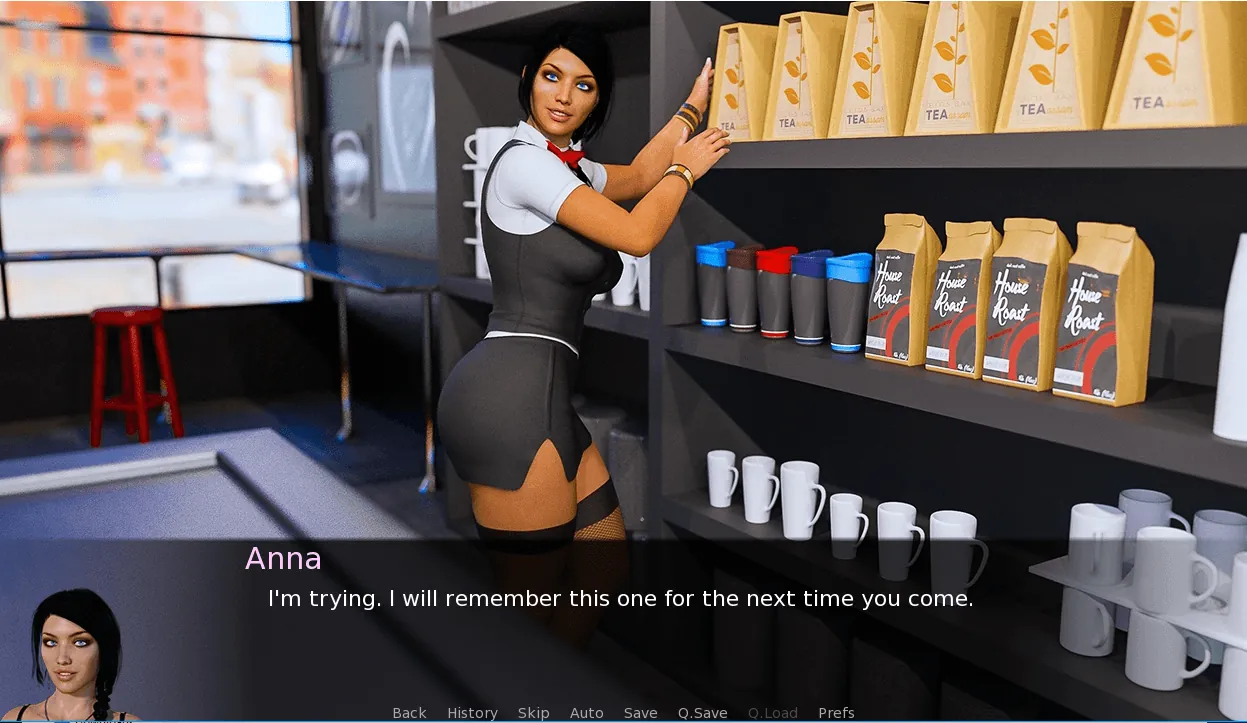
The Gift Reloaded
Play The Gift Reloaded
The Gift Reloaded Screenshots



The Gift Reloaded review
Explore gameplay mechanics, storyline elements, and what makes this visual novel unique
The Gift Reloaded stands out as a distinctive visual novel experience that combines narrative-driven gameplay with unique supernatural mechanics. This lewd visual novel places you in the role of a protagonist with mind control abilities, creating a branching storyline where your choices directly impact character relationships and game progression. Whether you’re new to the game or looking to deepen your understanding of its mechanics and features, this comprehensive guide explores what makes The Gift Reloaded a compelling experience for players interested in choice-driven narratives and character-focused storytelling.
Understanding The Gift Reloaded: Core Gameplay Mechanics
Ever feel like you’re just along for the ride in a story? 😩 You pick a dialogue option, hoping for a specific reaction, but the character just gives you a weird look and the plot chugs on down the same old track. I’ve been there. You think you have agency, but really, you’re just a passenger. That’s what makes diving into The Gift Reloaded gameplay mechanics such a breath of fresh air. This isn’t your typical click-through narrative; it’s a playground of psychological influence where your choices genuinely warp the world around you.
At its heart, The Gift Reloaded is a mind control visual novel, but that label barely scratches the surface. It’s a game about power, consequence, and the intricate web of human connection. The central mechanic—your supernatural ability to sway thoughts and actions—fundamentally changes every interaction, every relationship, and every story branch. It transforms passive reading into active manipulation. Let’s pull back the curtain and explore exactly how this captivating system works, how to master its nuances, and why it’s redefining player agency in the genre.
How Mind Control Powers Shape Your Gameplay Experience
So, you’ve discovered you have a “Gift.” 🎁 It’s not just a plot device; it’s your primary tool, your weapon, and your biggest moral dilemma all rolled into one. The mind control visual novel aspect is the engine of the entire game. Unlike games where persuasion is just a stat check, here it’s a tangible, resource-managed power you wield in real-time during conversations.
Think of it like this: in a normal visual novel, you choose what to say. In The Gift Reloaded, you choose what to think for someone else. 🧠 The mechanic is elegantly integrated into the dialogue interface. As you talk to an NPC, you’ll sometimes see a subtle, pulsating icon appear next to a potential response they might give. This indicates you can use your Gift to implant that thought, making them say or do something that aligns with your goals.
But it’s not a free “win conversation” button. Using your power consumes a resource (often visualized as a mental stamina or focus bar). Heavier influences—like making someone betray a deep-seated belief or perform a dangerous act—cost significantly more. This creates a brilliant strategic layer. Do you use a small nudge to get a discount from a shopkeeper now, or save your energy for a major manipulation of a key story character later? I learned this the hard way on my first playthrough, burning through my power on trivial gains and then being utterly powerless at a critical story junction. It was a brutal but effective lesson in resource management.
The real genius is how the game tracks the NPC attitude mechanics behind the scenes. Every character has a hidden “suspicion” or “awareness” meter. Repeated or blatant use of your Gift on the same person raises their suspicion. If it gets too high, they might become frightened, hostile, or even immune to further influence, locking you out of certain paths. This forces you to be clever, subtle, and sometimes patient. The most satisfying moments aren’t the big, flashy mind controls, but the subtle nudges over time that gently steer a character onto a path they believe was their own idea all along. 😌
Character Relationship Systems and Progression Mechanics
If the mind control is the scalpel, then the character relationship system is the complex anatomy you’re operating on. This isn’t a simple “like/dislike” bar. Each character is a mosaic of emotions, trust, fear, and attraction that you can paint on with your words and your powers.
How to play The Gift Reloaded effectively hinges on understanding these layers. Every interaction moves multiple needles. A character might simultaneously:
* Trust you more because you helped them.
* Fear you slightly because they sensed something “off” about your suggestion.
* Feel romantically intrigued by your confidence.
The visual novel progression system is directly tied to this web of emotions. Unlocking new story scenes, private conversations, and even major plot branches requires you to meet specific emotional thresholds with characters. You might need “Trust > 70” and “Fear < 30” to access a character’s vulnerable backstory, which in turn holds a clue vital to the main mystery.
This system makes every playthrough deeply personal. In one run, you might play a benevolent guide, using your Gift sparingly to help people overcome their anxieties, building pure trust. In another, you could be a manipulative puppeteer, stoking fear and dependency. The game’s progression acknowledges both as valid paths, opening up completely different narrative content and endings.
To visualize how your approach needs to adapt, here’s a breakdown of how different character archetypes typically react within the character relationship system:
| Character Archetype | Key Relationship Metrics | Mind Control Interaction & Tips |
|---|---|---|
| The Skeptic | High initial Suspicion, Slow Trust growth, Rationality metric. | Costly to influence directly. Better to use logical arguments in dialogue first to lower defenses. Small nudges on logically sound ideas are most effective. |
| The Empath | High Emotional Awareness, Fast Trust/Attraction growth, Vulnerability metric. | Very sensitive to forced control. Using power can cause sharp Fear spikes. They respond better to genuine (non-powered) kindness, but can be guided subtly toward self-care. |
| The Confident | High Self-Reliance, Attraction grows with displays of power, Low base Fear. | Respects strength. Direct and powerful uses of the Gift can actually increase Attraction. They see it as a trait to admire, making them unique partners for a dominant playstyle. |
| The Loyal Friend | Very High base Trust, Protective instinct, Jealousy metric. | Using your Gift on THEM feels like a betrayal and can crater Trust. However, using your Gift to protect THEM or help someone they care for can massively boost Loyalty. Manage their Jealousy carefully. |
Decision-Making and Branching Narrative Paths
This is where all the systems converge into pure storytelling magic. The Gift Reloaded is built on a foundation of branching narrative choices that put most other games to shame. It’s not about choosing “Good, Neutral, or Evil” at a few key moments. It’s about hundreds of micro-decisions that compound, intersect, and create a story path that feels uniquely yours.
The game’s branching narrative choices are deeply interwoven with the relationship and attitude systems. A decision isn’t just about Plot Point A or B. It’s about how you achieve an outcome and who you become in the process. For example, you might need to get a key from a guarded office. You could:
1. Use your Gift to command the guard to give it to you (Fast, high power cost, raises Suspicion).
2. Befriend the guard over several days, then ask for it (Slow, no power cost, builds Trust).
3. Manipulate a colleague to cause a distraction, then steal it (Medium cost, involves another character’s storyline).
Each choice progresses the “get the key” plot beat, but the ripple effects are wildly different. Option 1 might make the guard fearful of you later. Option 2 might turn the guard into a reliable ally. Option 3 might pull the colleague deeper into your web of influence.
Let’s look at a concrete example from the early game. You meet Alex, a stressed student about to fail an important assignment due to a bully stealing their notes.
Your Goal: Help Alex pass.
The Branches:
* Choice A (Direct Control): Use your Gift to make the bully return the notes. Alex passes but is confused and slightly wary of the bully’s sudden change. The bully’s attitude towards you becomes hostile and suspicious.
* Outcome: Short-term goal achieved. Alex’s “Trust” increases slightly, but “Confusion” is added as a new metric. The bully’s character route may now be harder or impossible to access. You’ve saved time but created a potential enemy.
* Choice B (Social Manipulation): Use your Gift on a teacher to subtly suggest they supervise the study hall more closely, preventing the theft. The bully is frustrated but doesn’t blame you. Alex passes on their own merit.
* Outcome: Goal achieved. Alex’s “Trust” and “Respect” increase significantly. The bully’s attitude is unchanged. The teacher’s “Attentiveness” towards you increases slightly. A more complex, rewarding path that strengthens a relationship without making an enemy.
* Choice C (Empowerment): Don’t use your power. Instead, spend several dialogue scenes coaching Alex on confidence, helping them find backup notes, and strategizing how to confront the bully. This takes multiple in-game days.
* Outcome: If successful, Alex passes and their “Self-Confidence” and “Loyalty” metrics skyrocket. You’ve unlocked a deep, non-powered bond. The bully may even develop a grudging respect for Alex. However, you risk failure if other relationship metrics aren’t high enough, and it consumes valuable time that could be spent on other plots.
See how one scenario explodes into a web of consequences? This is the core loop: explore options, understand character states, and decide which levers—conversation or power—to pull. The NPC attitude mechanics directly gate these possibilities. If Alex already feared you, the “Empowerment” path might be closed. If the teacher disliked you, the “Social Manipulation” option would have a prohibitive power cost.
Mastering The Gift Reloaded gameplay mechanics is about embracing this complexity. There’s no single “right” way to play. My advice? Save often, and don’t be afraid to experiment. 🧪 Be curious about the failures as much as the successes. Sometimes, seeing a relationship shatter or a plan backfire spectacularly leads to the most fascinating, unintended narrative branches—stories you would never have seen if you’d just played it “safe.”
Ultimately, the game remembers everything. A casual comment in Chapter 1, fueled by a tiny bit of power, can be referenced in a confrontation in Chapter 8. This sense of a truly persistent, reactive world is what sets The Gift Reloaded apart. It’s a testament to a visual novel progression system that values the journey—every whispered thought, every earned smile, every fractured trust—as much as the destination. Your power is a gift, but how you choose to unwrap it defines not just the story, but the very nature of the connections within it.
The Gift Reloaded delivers a compelling visual novel experience that centers on meaningful player choice and character-driven storytelling. By combining mind control mechanics with a sophisticated relationship system, the game creates a unique space where your decisions genuinely shape the narrative and character outcomes. Whether you’re drawn to the branching storylines, the diverse cast of characters, or the freedom to approach relationships in different ways, The Gift Reloaded offers substantial replay value and engaging gameplay mechanics. Understanding the core systems—from relationship progression to decision consequences—allows you to fully appreciate the depth of the experience and discover new story paths with each playthrough. For players seeking a visual novel that respects player agency while delivering compelling character narratives, The Gift Reloaded stands as a notable entry in the genre that rewards exploration and experimentation.